

Published by aakruthiproperties April 29, 2026
As far as the rapid pace of urbanization seen today is concerned, gaining an insight into the idea of housing demand is absolutely necessary for home buyers and real estate developers alike.
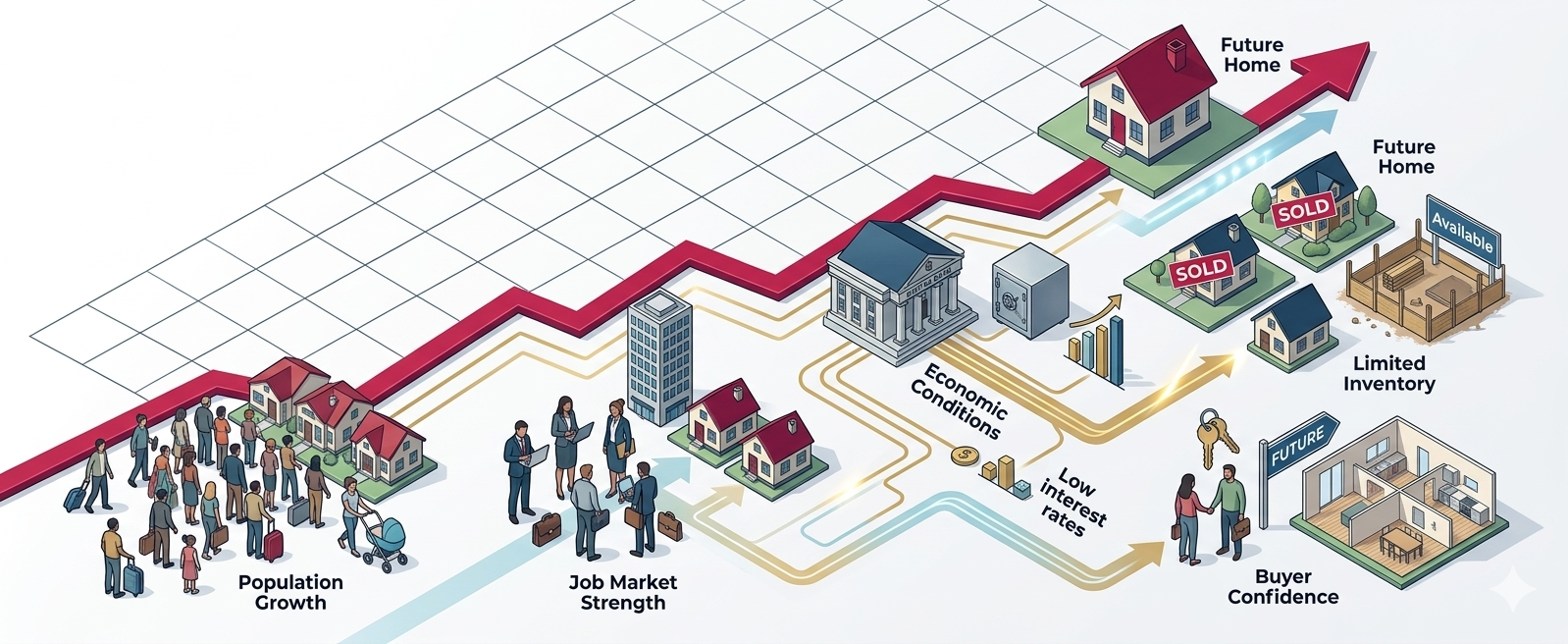
Not only does housing demand include the number of potential buyers in the market but also the state of the economy, changing lifestyles, and other demographic factors.
With the continuous growth of major cities and increase in migration due to improved career prospects, there has been an increasing trend of housing demand in India in recent times.
Here we discuss the topic in detail, providing all relevant information about the influencing factors on housing demand in India.
What Is Housing Demand?
In essence, the housing demand definition can be understood as the number of persons or households that are both able and willing to buy or rent homes during a particular period of time.
It is worth mentioning that willingness alone is insufficient for demand; the consumer must also have sufficient financial means. In other words, while an individual may be keen on purchasing a property, he or she does not create demand if they cannot afford it.
The Indian housing demand is driven by several factors, including growing incomes and urbanization in India.
Housing Demand in India: A Rapidly Growing Landscape
The way in which housing demand works in India has seen many changes through the decades. As more and more people continue to migrate into cities because of better job prospects and infrastructure facilities, housing demands have been rising steadily in cities across the country.
In addition, the rising middle class of the nation has started playing an important part in influencing housing demands.
Not only are individuals now seeking accommodation, but they also wish to invest in good quality homes. Consequently, there has been a rise in demand for affordable housing in India.
Demand for Affordable Housing: The Core Growth Segment
The need for affordable housing is one of the major trends prevailing in the current market environment. There is a significant proportion of people who belong to the middle-class group and whose main criterion is affordability.
The need for affordable housing in India can be attributed to:
- Rising costs of properties in urban centers
- Government initiatives and subsidies
- Availability of home loans
- Greater awareness regarding the benefits of homeownership
Affordable housing units are no longer basic but offer various facilities.
Key Factors Affecting Demand for Housing in Cities
Identifying the demand determinants will allow us to make wise decisions regarding investment in housing. Listed below are the most important factors that affect the housing market:
Economic Performance and Employment
If the economy is growing well, there will be numerous jobs available in the country. As people will have sufficient money in their pockets due to higher earnings, the likelihood of buying a house is higher. Cities having developed industries attract many workers who purchase houses.
Rate of Interest and Home Loan Availability
It is essential to consider the rate of interest while buying a house. People find it easy to borrow money to buy a house when interest rates are low.
It encourages many individuals to look for housing options, thereby increasing demand. Conversely, high interest rates discourage buyers from purchasing a house.
Urbanization and Population Increase
Urbanization has a considerable effect on the demand for property. Many people choose cities as they offer better educational institutions and opportunities for employment and an improved standard of living.
Development of Infrastructure
Infrastructure has become an important determinant of housing demand. Development of metro, highways, airports, and commercial complexes has been playing a major role in boosting demand.
Affordability and Income Level
The affordability factor is one of the most important in the decision-making process for buyers of real estate.
The ratio of the cost of real estate and the level of income is the determining element of its availability to consumers, which is the reason for the prevalence of demand for affordable houses.
Government Incentives and Policies
Various governmental actions related to benefits, subsidies, and programs for buyers contribute to increased demand for housing.
Lifestyle Changes and Preferences of Buyers
In modern reality, the choice of residential properties is no longer determined by price alone but by various features and characteristics.
The demand for properties that provide comfortable living and meet certain requirements depends on buyer preferences.
Financing Conditions and Possibilities
The possibility of obtaining loans and other types of financial instruments increases the number of potential buyers of real estate, thereby stimulating demand.
Trend in the Rental Market
For places where there is a lot of demand for rentals, buying is done mainly with the aim of earning money from the investments. This indirectly increases the demand for homes, especially those near business hubs and educational institutions.
Sentiments and Expectations of Buyers
Sentiments on the part of buyers and their expectation that prices will increase further also have a direct impact on the market. This makes buyers willing to buy at an earlier stage to take advantage of a future value increase.
Supply and Demand for Housing
The balance between the supply and demand for housing is the determinant of how the market will be shaped. When the demand is greater than the supply, prices will go up due to competition in the market.
On the other hand, when the supply surpasses the demand, prices will remain stable or even reduce. In India, for instance, while there may be high demand for affordable houses with low supply, the case is different for premium houses.
Why Understanding Housing Demand Is Important
An analysis of housing demand is necessary for:
- Finding out a good place to invest
- Forecasting future prices
- Finding the areas where there is more growth
- Making good buying decisions
Knowing how demand works makes sure that your investments are relevant and valued.
How Does Aakruti Suit the Trends in Housing Demand?
Since the housing demand is changing, it is important to select the right developer. Aakruti is aware of housing demand in India and works on projects that suit the present demands of buyers.
They provide houses that not only suit the present demand in the country but also add long-term value.
Final Thoughts
The knowledge about what housing demand actually means forms the basis of a smart approach towards real estate transactions. A number of aspects, such as economic growth, infrastructure development, affordability, and others, influence the way housing demand changes in urban areas.
The following Real Estate Guide explains that awareness of those things that affect housing demand will provide you with an edge over the competition. Rather than making guesses, you will base your decision-making process on facts and trends.
Given that urbanization and housing demand in India are constantly growing, there will be more chances to succeed in real estate. Provided that you possess enough information about the field, you can take advantage of the situation with the help of such companies as Aakruti.